
Haftarah Trope
In memory of Lionel Kopelowitz z”l
On this page, you will find recordings with diagrams, the Hebrew names and transliterations – everything you need to help you practise to leyn (chant) the Haftarah in the Western Ashkenazi trope.
Introduction to leyning
This webpage is designed to help you recap and practise as you learn, but is not intended to teach you how to leyn from scratch. To learn to leyn, you will need a teacher or further guidance. Masorti Judaism, EAJL and synagogues run courses from time to time, or you can contact Chazzan Rebecca Blumenfeld for guidance or more information.
Based on notation by Dr. Chani Smith.
With thanks to Chazan Rebecca Blumenfeld, Chazan Jaclyn Chernett, Victor Tunkel z”l and CantorEducator.com
When Haftarah is chanted out loud, this is called ‘leyning’ (Yiddish: “to read”). Symbols above or below the words, known as te’amim, indicate how to parse the word grammatically and also how to chant the word with the correct emphasis and what melody to use. There are a number of different melodic systems – or trope – that can be used to chant the Torah and indeed other texts within our tradition. The recordings on this page are Western Ashkenazi trope.
Each leyning group or family is colour-coded. This helps to identify which family we are learning (e.g. Sof-Pasuk, the Blue family), and will be incredibly useful when we are applying the leyning theory to the text as we will be able to colour-code our text too.
Each leyning family has a number of variants, which you can hear in the recordings. These variants will be accompanied by its music and transliteration. In the transliteration, the capitalised syllable is the emphasised syllable in that melody.
The transliteration and music notation (example below) are read left to right.
 The diagram (example below) reads like Hebrew, from right to left.

These diagrams demonstrate where the leyning symbol (ta’am) is in relation to the word. For example, this picture shows you that all these leyning te’amim (symbols) occur underneath the word, with the rectangle boxes representing the words. If the box is white, this ta’am is conjunctive. This is punctuation that connects words together, and means that its melody can change if it is a munach, merkha or kadmah, depending on the ta’am that follows it.
If the box is grey, this ta’am is disjunctive. This is punctuation that separates ideas and we typically take a short pause after a disjunctive. Its melody will always be set, it will not change depending on what comes after it.
This is the end of every verse, where you see a : in the text.
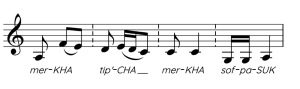
sof-paSUK
סוֹף-פָּסֽוּק׃

merKHA
מֵרְכָא

tip’CHA
טִפְּחָא

merKHA
מֵרְכָא

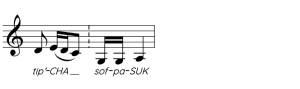
טִפְּחָא סוֹף-פָּסֽוּק׃

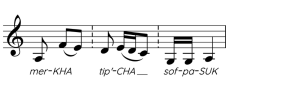
מֵרְכָ֥א טִפְּחָ֖א סוֹף-פָּסֽוּק׃

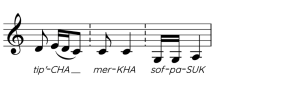
טִפְּחָ֖א מֵרְכָ֥א סוֹף-פָּסֽוּק׃

מֵרְכָ֥א טִפְּחָ֖א מֵרְכָ֥א סוֹף-פָּסֽוּק׃
This appears once in almost every verse and denotes a pause.
et-nach-TA
אֶתְנַחְתָּ֑א

mu-NACH
מֻנַּ֣ח

tip’CHA
טִפְּחָ֖א

merKHA
מֵרְכָ֥א

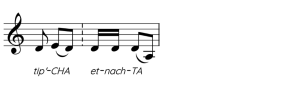
טִפְּחָ֖א אֶתְנַחְתָּ֑א

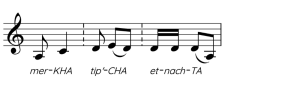
מֵרְכָ֥א טִפְּחָ֖א אֶתְנַחְתָּ֑א

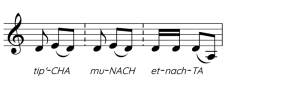
טִפְּחָ֖א מֻנַּ֣ח אֶתְנַחְתָּ֑א

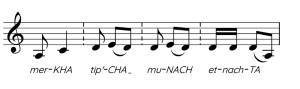
מֵרְכָ֥א טִפְּחָ֖א מֻנַּ֣ח אֶתְנַחְתָּ֑א

This is a short pause in a verse. In this family, the trope signs are both below and above the word.
ka-TON
קָט֔וֹן

mu-NACH
מֻנַּ֣ח

pash-TA
פַּשְׁטָא֙

mah-PACH
מַהְפַּ֤ך

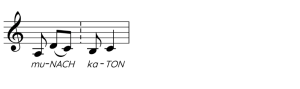
מֻנַּ֣ח קָט֔וֹן

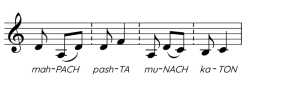
מַהְפַּ֤ך פַּשְׁטָא֙ מֻנַּ֣ח קָט֔וֹן

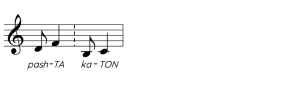
פַּשְׁטָא֙ קָט֔וֹן

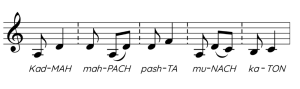
קַדְמָ֨א מַהְפַּ֤ך פַּשְׁטָא֙ מֻנַּ֣ח קָט֔וֹן

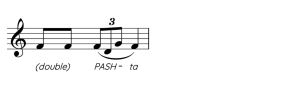
פַּשְׁטָא

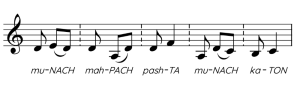
מֻנַּ֣ח מַהְפַּ֤ך פַּשְׁטָא֙ מֻנַּ֣ח קָט֔וֹן

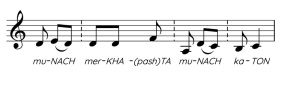
מֻנַּ֣ח מֵרְכָ֥א [פַּשְׁ]טָא֙ מֻנַּ֣ח קָט֔וֹן

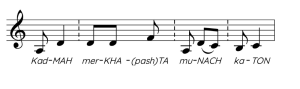
קַדְמָ֨א מֵרְכָ֥א [פַּשְׁ]טָא֙ מֻנַּ֣ח קָט֔וֹן

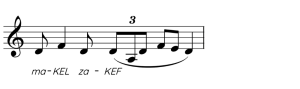
מַקֵ֨ל-זָקֵ֔ף

t’VIR
תְּבִ֛יר

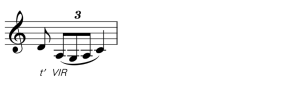
תְּבִ֛יר

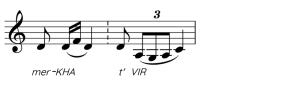

מֵרְכָ֥א תְּבִ֛יר
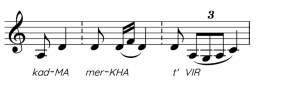

קַדְמָ֨א מֵרְכָ֥א תְּבִ֛יר
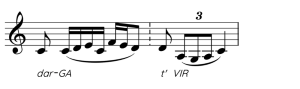

דַּרְגָּ֧א תְּבִ֛יר
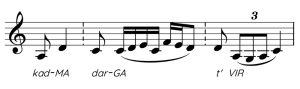

קַדְמָ֨א דַּרְגָּ֧א תְּבִ֛יר
GE-resh
גֵּ֜רֵשׁ

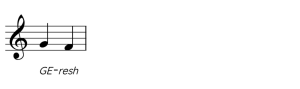
גֵּ֜רֵשׁ
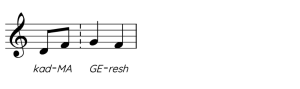

קַדְמָ֨א גֵּ֜רֵשׁ
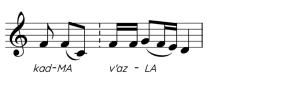

קַדְמָ֨א וְאַזְלָ֜א
r’VI-a
רְבִ֗יעַ

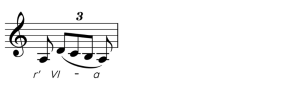
רְבִ֗יעַ
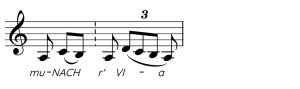

מֻנַּ֣ח רְבִ֗יעַ
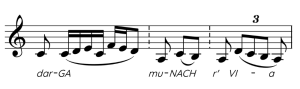

דַּרְגָּ֧א מֻנַּ֣ח רְבִ֗יעַ
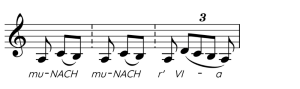

מֻנַּ֣ח | מֻנַּ֣ח רְבִ֗יעַ
This ta’am appears in various families, so it does not have its own colour.
t’lisha k’taNA
תְּלִישָא קְטַנָּה֩


תְּלִישָא קְטַנָּה֩
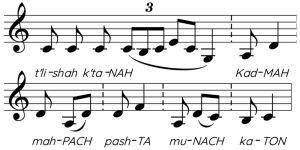

תְּלִישָא קְטַנָּה֩ קַדְמָ֨א מַהְפַּ֤ך פַּשְׁטָא֙ מֻנַּ֣ח קָט֔וֹן
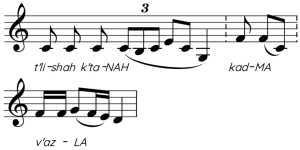

תְּלִישָא קְטַנָּה֩ קַדְמָ֨א וְאַזְלָ֜א
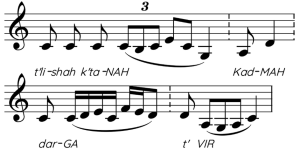

תְּלִישָא קְטַנָּה֩ קַדְמָ֨א דַּרְגָּ֧א תְּבִ֛יר
se-GOL
סֶגּוֹל֒

zar-KA
זַרְקָא֮


זַרְקָא֮ סֶגּוֹל֒
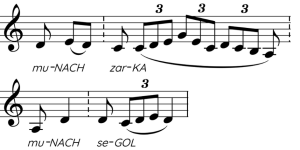

מֻנַּ֣ח זַרְקָא֮ מֻנַּ֣ח סֶגּוֹל֒
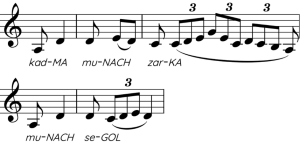

קַדְמָ֨א מֻנַּ֣ח זַרְקָא֮ מֻנַּ֣ח סֶגּוֹל֒
zakef ga-DOL
זָקֵף גָּד֕וֹל

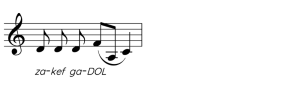
זָקֵף גָּד֕וֹל
ger-sha-IM
גֵּרְשַׁ֞יִם

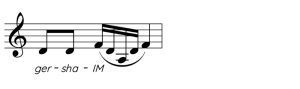
גֵּרְשַׁ֞יִם
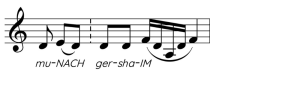

מֻנַּ֣ח גֵּרְשַׁ֞יִם
y’TIV
יְ֚תִיב

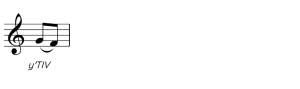
יְ֚תִיב
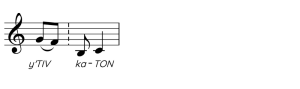

יְ֚תִיב קָט֔וֹן
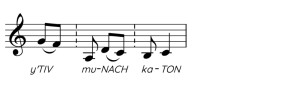

יְ֚תִיב מֻנַּ֣ח קָט֔וֹן
T’lisha G’doLA
תְּ֠לִישָא גְדוֹלָה


תְּ֠לִישָא גְדוֹלָה
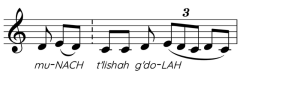

מֻנַּ֣ח תְּ֠לִישָא גְדוֹלָה
PaZER
פָּזֵ֡ר

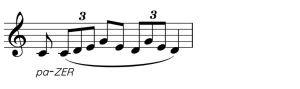
פָּזֵ֡ר
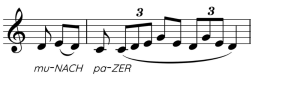

מֻנַּ֣ח פָּזֵ֡ר
Sof – Haftarah
סוֹף־הַפְטָרָֽה

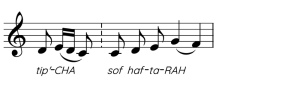

טִפְּחָ֖א סוֹף־הַפְטָרָֽה
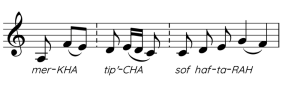

מֵרְכָ֥א טִפְּחָ֖א סוֹף־הַפְטָרָֽה
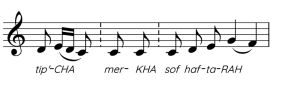

טִפְּחָ֖א מֵרְכָ֥א סוֹף־הַפְטָרָֽה
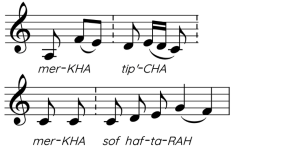

מֵרְכָ֥א טִפְּחָ֖א מֵרְכָ֥א סוֹף־הַפְטָרָֽה